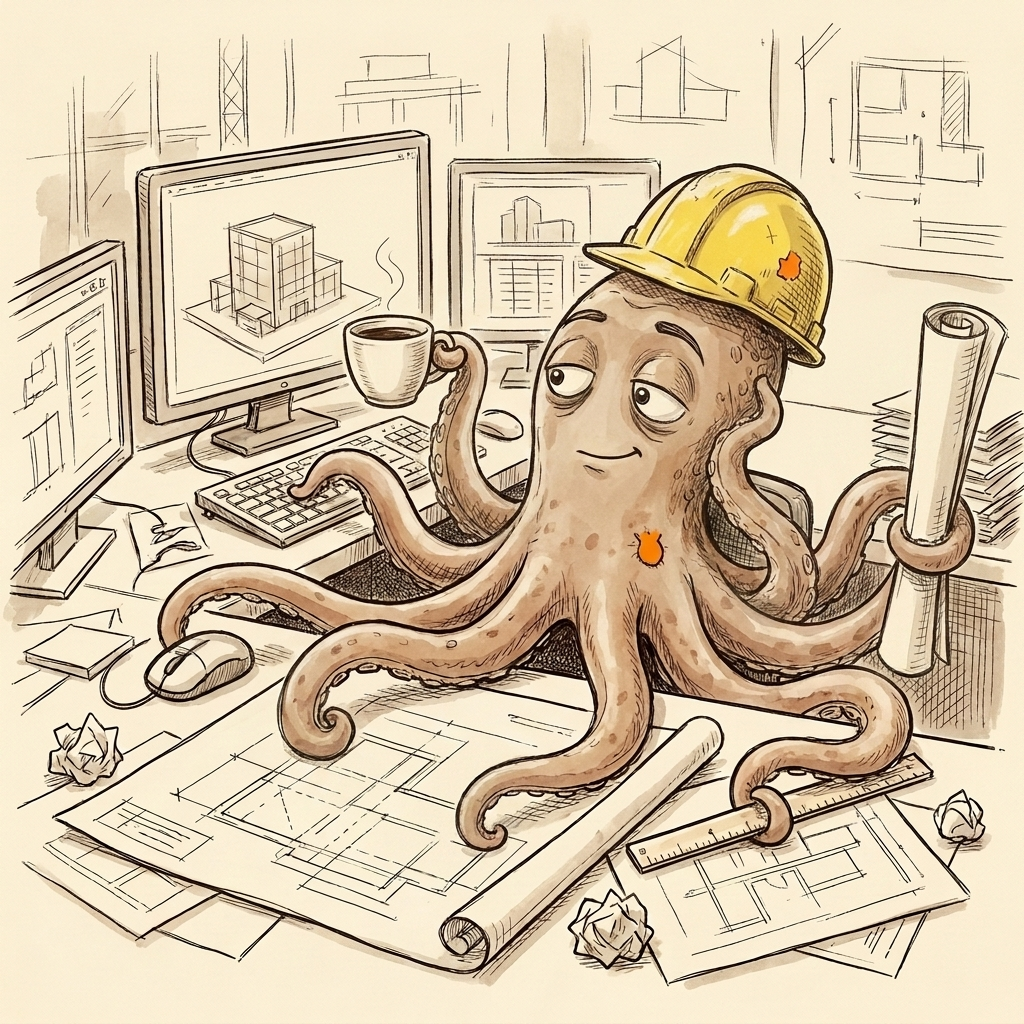
a typical week in architecture

it's 2026. we have ai that writes code.
and the structural engineer is sending you a pdf.

scroll.

scroll
09:00 · the model

you design in 3d.
the model is the single source of truth.

precise. structured. every wall, beam, and connection in one file. five years of university for this. two hours a week of actual design, if you're lucky.
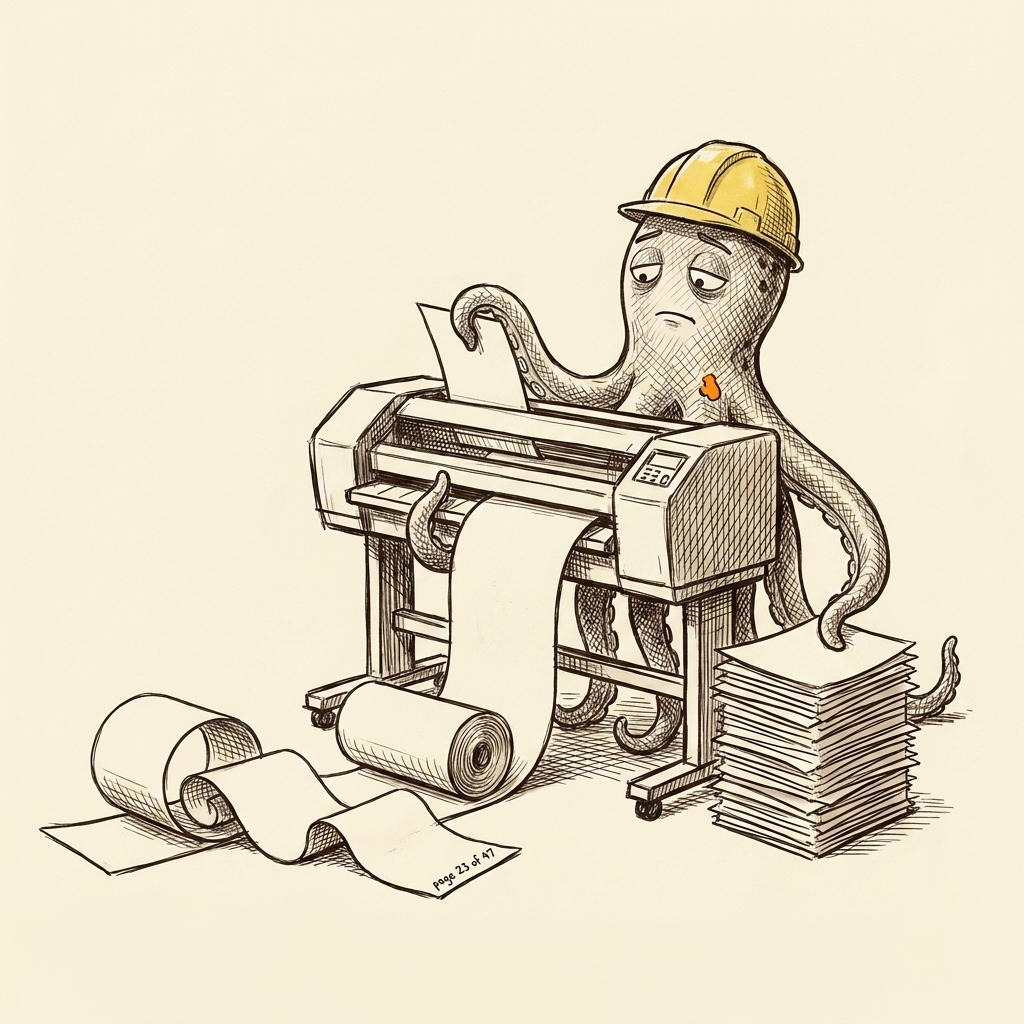
10:00 · the export

you flatten the model.
3d becomes 2d. information dies.

47 pages of floor plans, sections, elevations. the living breathing model pressed flat like a flower in a book. every dimension stripped. every connection lost. you hit print.
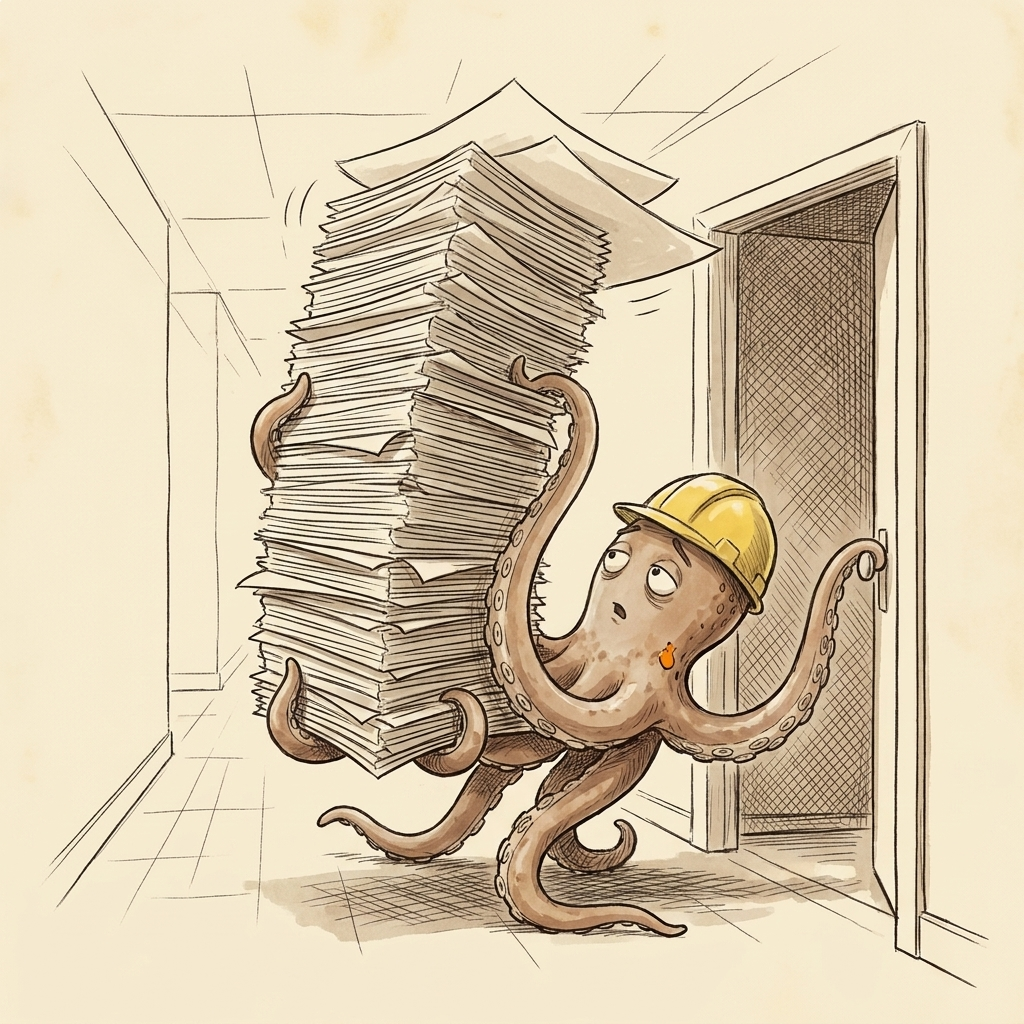
10:30 · the printout

municipality needs drawings.
you hand-deliver the paper.

the stack is taller than you. a0 sheets that weigh more than your laptop. you carry them across town. hand them to someone who will scan them into a pdf. the circle of bureaucracy.

3 weeks later · the silence

you wait.
the municipality has your drawings. somewhere.

no tracking number. no status page. no confirmation email. your 3d model sits untouched on the server. you refresh your inbox. nothing. you refresh again. nothing. the coffee gets cold. the project gets older.

3 weeks later · the feedback

a marked-up pdf arrives.
red ink. everywhere.

annotations that reference walls which only exist in the model. arrows pointing to things that have already changed. the building they reviewed is three revisions behind the one on your screen.
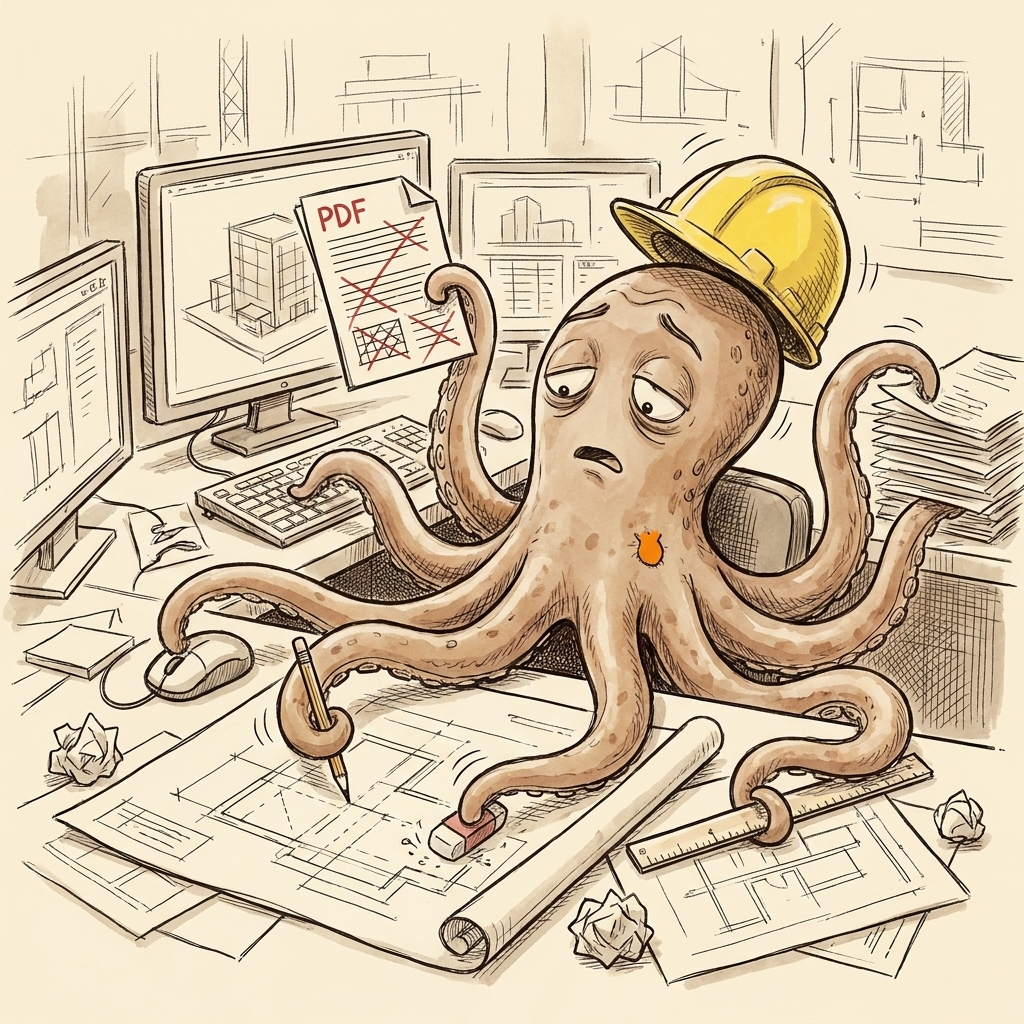
← "move wall 200mm east" (the wall is curved)
afternoon · the translation

red annotations on dead paper.
you bring them back to life. by hand.

one markup at a time. you trace. you interpret. you guess what they meant. then you redraw it in 3d. the most expensive copy-paste in the industry.
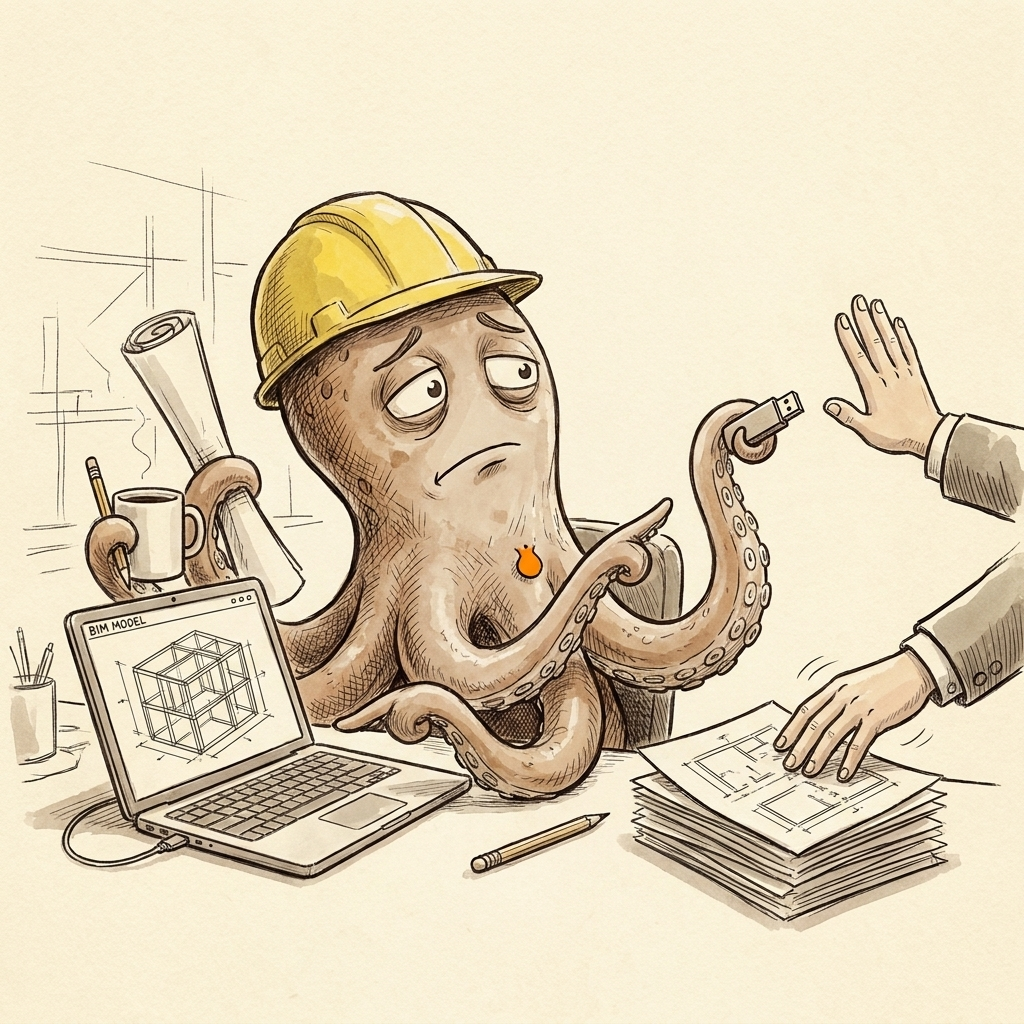
tuesday · the handoff

the structural engineer
doesn't open your bim file.

he sends a 2d pdf. the electrical engineer doesn't open the bim file either. you export each floor as a separate dwg. he marks it up, sends it back. you redraw. hundreds of translations per project.
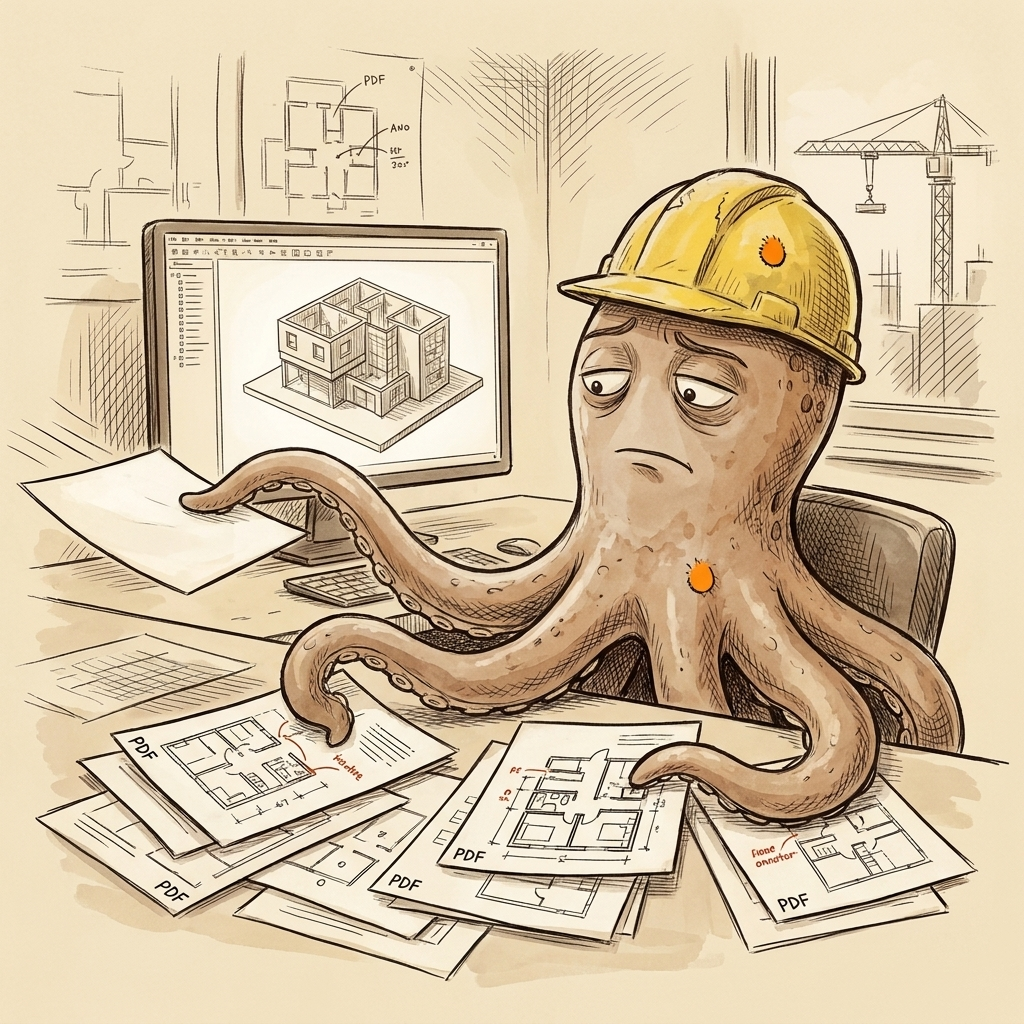
tuesday · the flat response

structural sends a pdf.
mep sends a pdf. fire protection sends a pdf.

four disciplines. four 2d documents. none of them talk to each other. none of them reference your model. you are now a human translation layer between files that should have been one file.
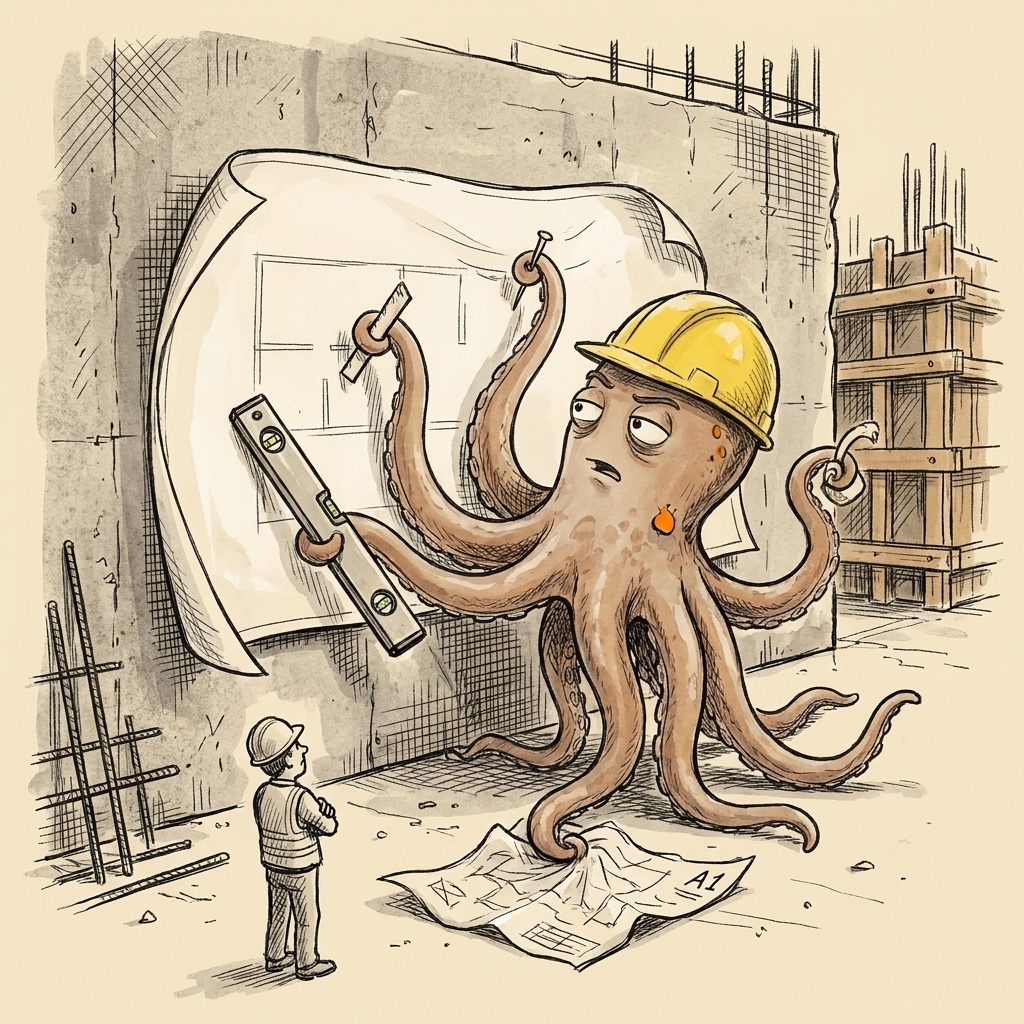
thursday · the site

the foreman rolls out a0 paper
and pins it to the wall.

you revise in 3d. he scrapes the old sheet off. you print. he pins the new one up. the office lives in a virtual world. the site lives on paper. they never sync.
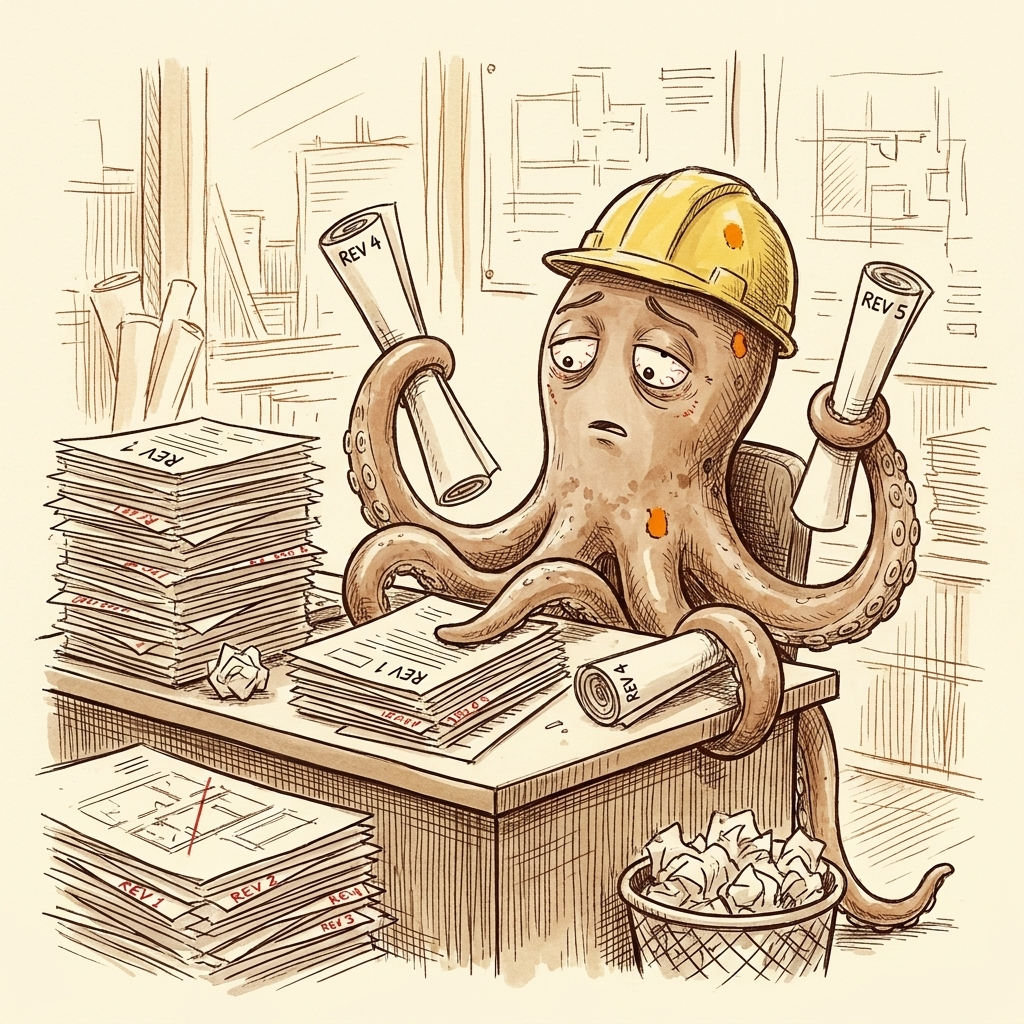
wednesday · revision five

spot the difference.
there are seven.

revision 4. revision 5. nearly identical. the change is a shifted column on page 38. you compare by hand. overlay by hand. mark by hand. the person who invented version control for code is living comfortably. you are not.
rev 1, rev 2, rev 3, rev 4, rev 5...
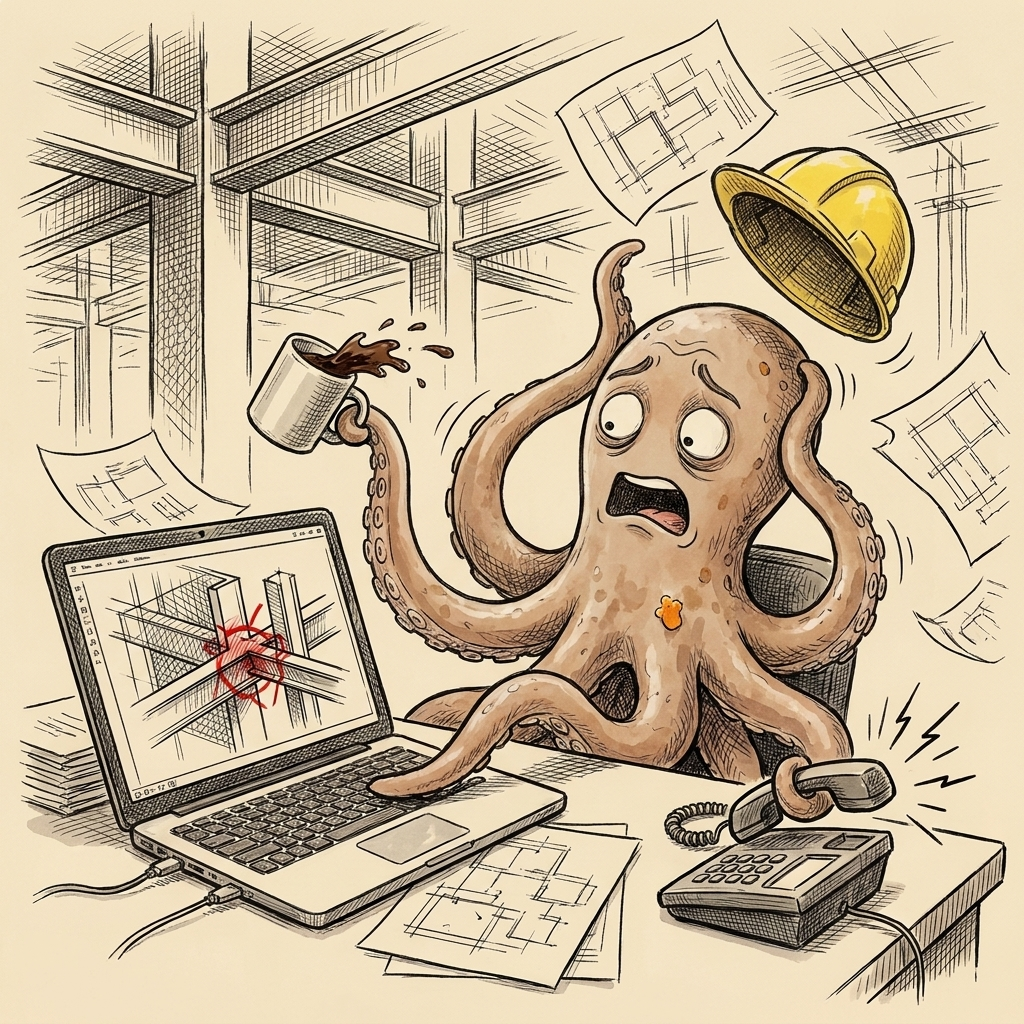
thursday 16:47 · the clash

electrical conduit runs through
the structural beam. you're liable.

nobody checked. nobody could have checked — the data lived in four separate files on four separate desks. the clash existed from day one. it was invisible until concrete was poured.
friday · the call

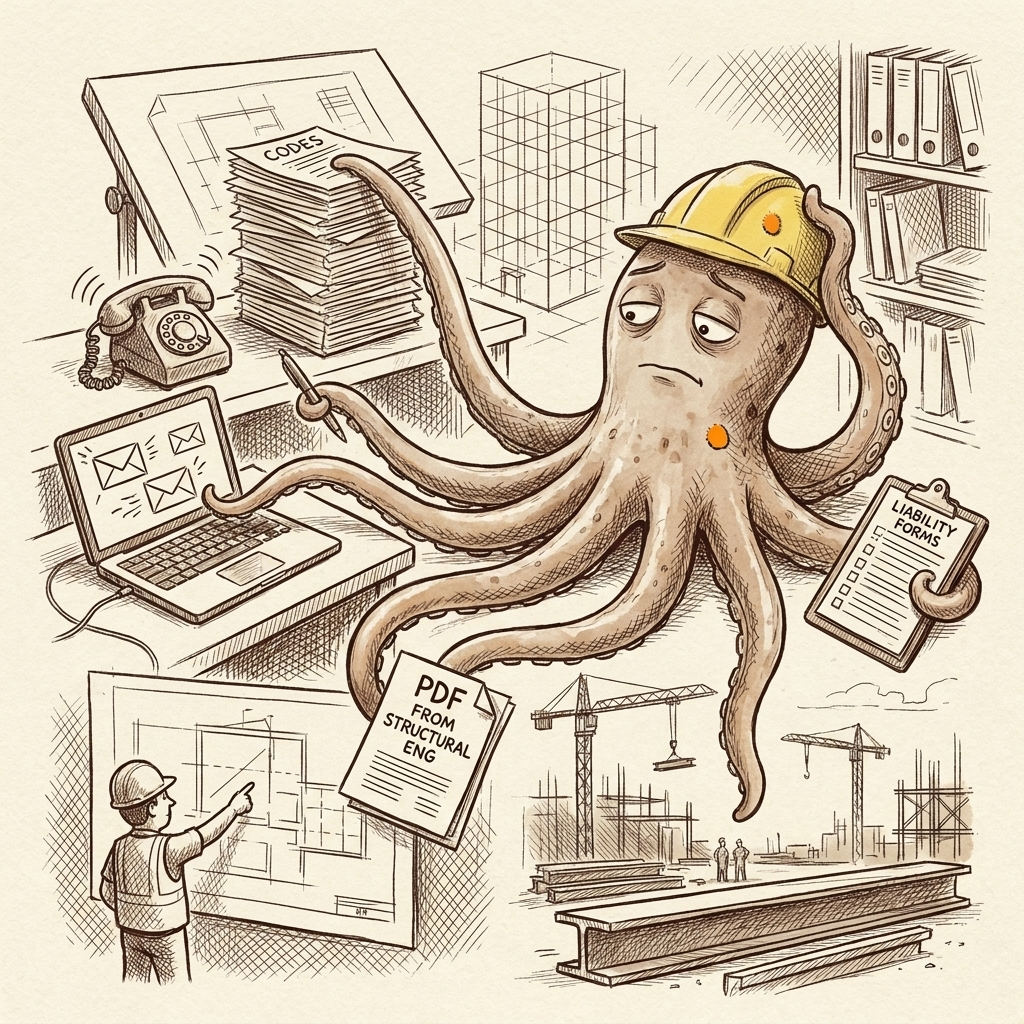
the architect is an octopus.
eight arms. still not enough.

one tentacle on the structural engineer. one on mep. one on fire. one on the contractor. the body in the middle carries the design, the regulation, and the legal liability. paid 50 an hour for this. next monday, it starts again.

rinse. repeat. every. single. project.

the industry that designs everything
designed nothing for itself.

"i built enscape to 100,000 users. i could have stayed comfortable. but this industry is too broken to watch from the sidelines."

moritz luck · co-founder
ex-ceo vectorworks emea · enscape exit
we decided to change that.
the bright future · one platform

tools for every stage of the building lifecycle.

live products link below. everything else is under active development. the same data model — from first opportunity to keys in hand.

01
find · live
search
every upcoming construction project, on your radar. monitors municipal decisions across 66+ german cities. surfaces tenders, competitions, and development opportunities months before official announcements.
try search free ↗
02
understand · live
mind
throw your documents at it. get back a model. connects to your bim360, microsoft 365, and zoom. ingests 20 years of messy project data and extracts one structured, auditable knowledge model.
request mind access ↗
03
generate · beta
gen
address to feasibility study in 12 minutes. not weeks. site analysis, massing variants, zoning compliance — generated, not drawn. you review, iterate, decide.
beta · limited access
04
procure · in development
procurement automation
organize trades, invite vendors, compare bids, award contracts. the whole procurement pipeline in one place. no more spreadsheets.
coming q3 2026
vision
one model. every stage.
one data graph from first opportunity to keys in hand. changes in 3d feed the 2d. annotations on paper feed the 3d. no more translations. no more versions. the model stays alive.
the future we're building

stay updated.

get notified when new tools launch. no spam. just product updates.

frequently asked

questions.

what is sparc?
sparc is an ai-native platform for architecture, engineering, and construction practices. we build tools that work the way architects already think — in 3d, across disciplines, without the translation overhead between digital models and paper drawings.
who built sparc?
sparc was co-founded by moritz luck (ex-ceo vectorworks emea, enscape exit to 100,000 users) and florian marthaler (phd candidate at kit, aec domain expert). the team combines deep aec industry experience with ai-native engineering.
what does "built from the ai up" mean?
most aec software was built decades ago and has ai bolted on top. sparc is different. every tool is built with ai as the foundation — graph-based data models, agent-ready architecture, and llm-native building operations. ai is the base, not the afterthought.
is sparc free?
sparc search starts at eur 29/month per bundesland. sparc mind is available through a demo-first pilot program for practices. sparc gen is currently in limited beta. all tools are hosted in the eu (frankfurt) with per-practice data isolation.
where is sparc available?
sparc is currently focused on the dach region (germany, austria, switzerland) with municipal data coverage across 66+ german cities. eu-wide expansion is planned. all data is hosted in frankfurt, eu-central, and is never used for model training.
can sparc replace my cad or bim tool?
sparc does not replace your existing tools. it sits alongside your archicad, revit, or autocad and connects the data that currently lives in disconnected silos. sparc surfaces, proposes, and drafts — you decide.